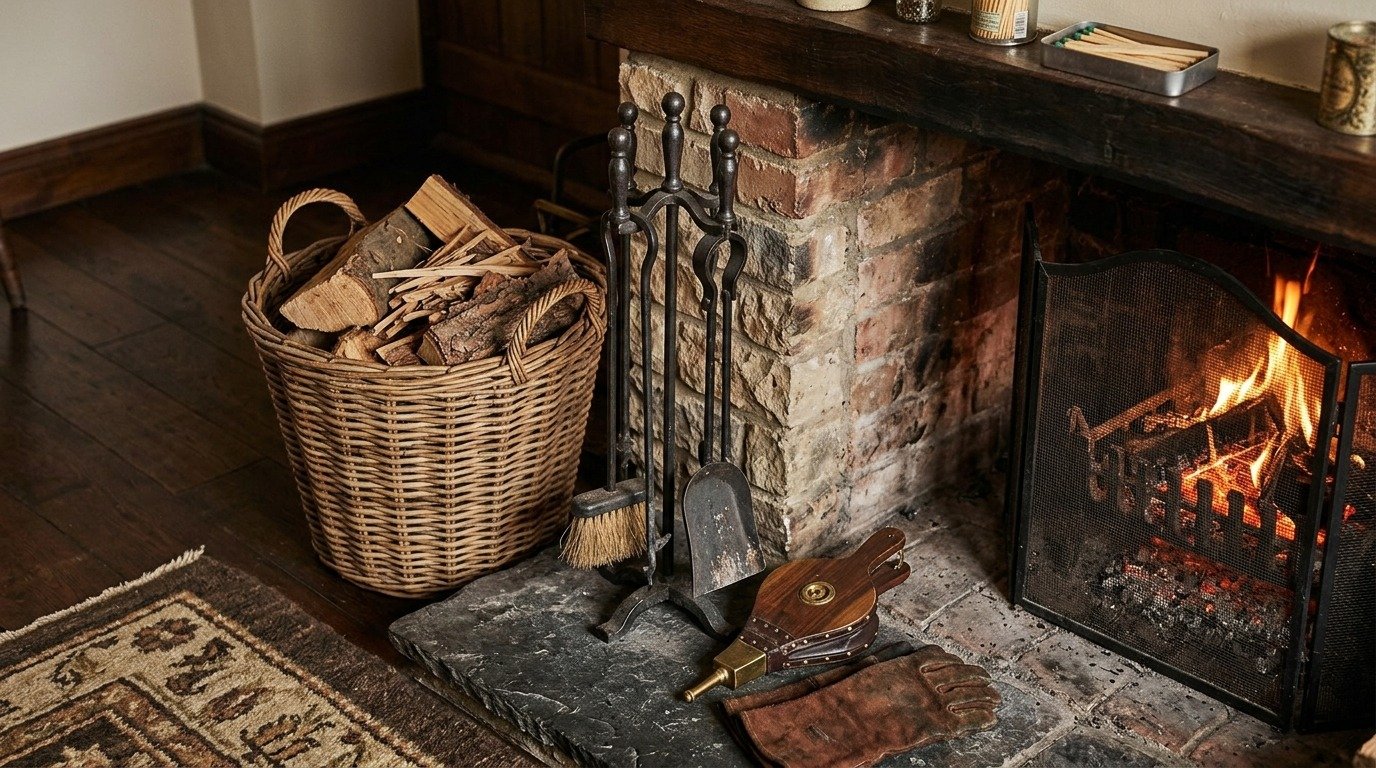

Fireplace Accessories for 2026: The Cozy-and-Safe Guide to Screens, Tools, Firewood Storage & Decor
The first cold snap sends everyone back to the hearth, and Pinterest shoppers are already there. In late-September shopping data, "Fireplace & wood stove accessories" was one of the fastest-growing home categories, up about 59% month over month. Outbound clicks, which means people leaving Pinterest to shop, grew 62%. That is buying intent, not just daydreaming.
This guide starts with safety, because a hearth is only cozy when it is safe. Then it covers fireplace accessories by job, the 2026 design look, how to choose between electric, gas, and wood, firewood storage, mantel styling, and fire pit gear.
1. Safety First: Seven Rules Before You Buy Anything
2. Fireplace Accessories by Job
3. Wood Stove Add-Ons
4. The 2026 Look: Make the Hearth the Feature
5. Electric, Gas, or Wood?
6. Firewood: Buy, Season, Store
7. Mantel & Hearth Styling That Isn't a Fire Hazard
8. Fire Pit & Outdoor Fireplace Gear
9. What to Buy First
10. Common Mistakes & FAQs
Safety First: Seven Rules Before You Buy Anything
Heating equipment was the second leading cause of home fires in the US in 2021, according to the US Fire Administration. That meant an estimated 32,200 fires and 190 deaths. Most of the causes are simple and preventable, so start here.
| Rule | Why it matters |
|---|---|
| 1. Inspect every year | Fire departments say the main cause of fireplace fires is a dirty chimney. Have chimneys and heating equipment cleaned and inspected annually by a qualified professional. |
| 2. Use a sturdy screen | A metal or glass screen stops sparks from reaching rugs and furniture. |
| 3. Keep 3 feet clear | Nothing that can burn should sit within three feet of a fireplace, wood stove, or heater. |
| 4. Handle ashes carefully | Let them cool completely, then store them in a metal container with a lid, away from your home. Never use plastic, cardboard, or paper bags. |
| 5. Burn only dry, seasoned wood | Never burn trash or treated lumber. Wet wood smokes more and builds up residue. |
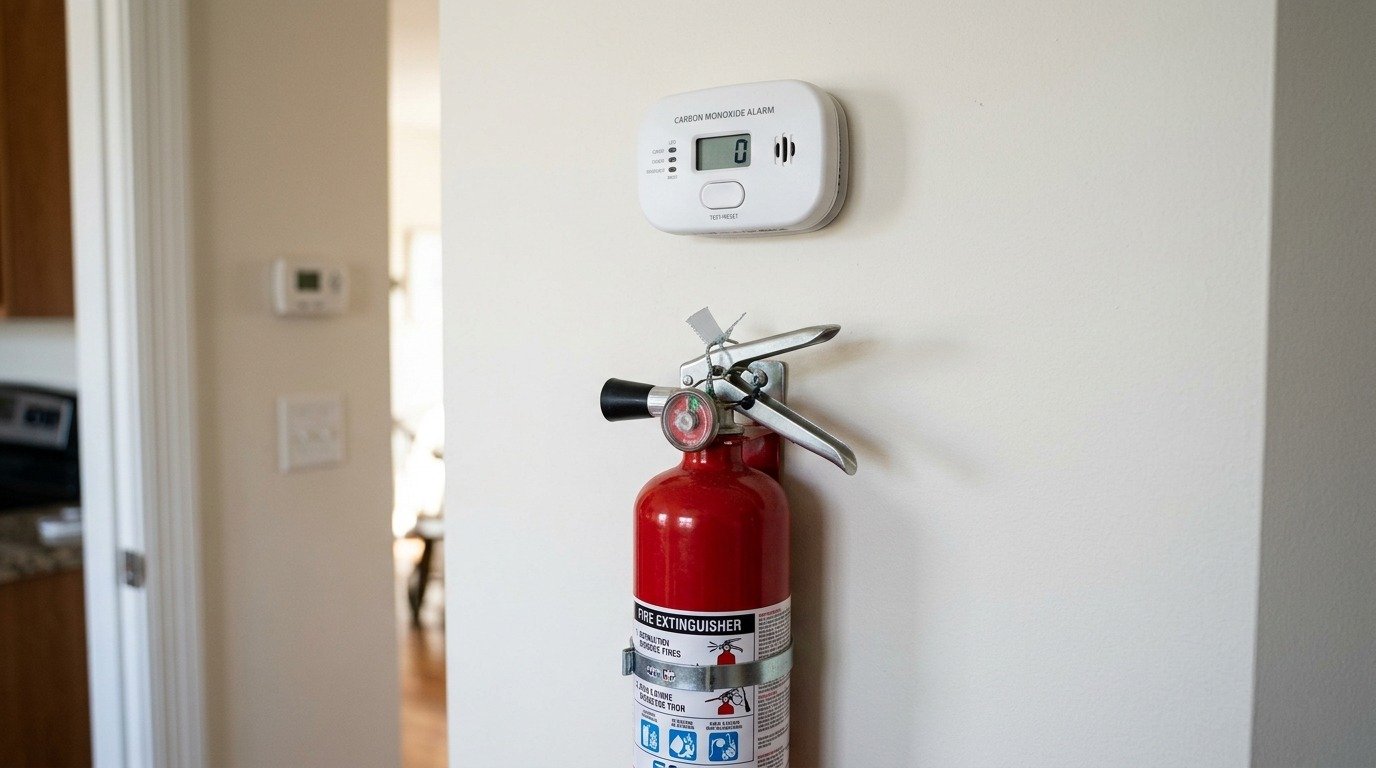
| 6. Install CO alarms | Carbon monoxide is odorless and invisible. Place alarms outside bedrooms and on every level, and test them monthly. |
| 7. Never leave a fire unattended | Keep children and pets at least three feet back, and keep a fire extinguisher handy. |
Fireplace Accessories by Job
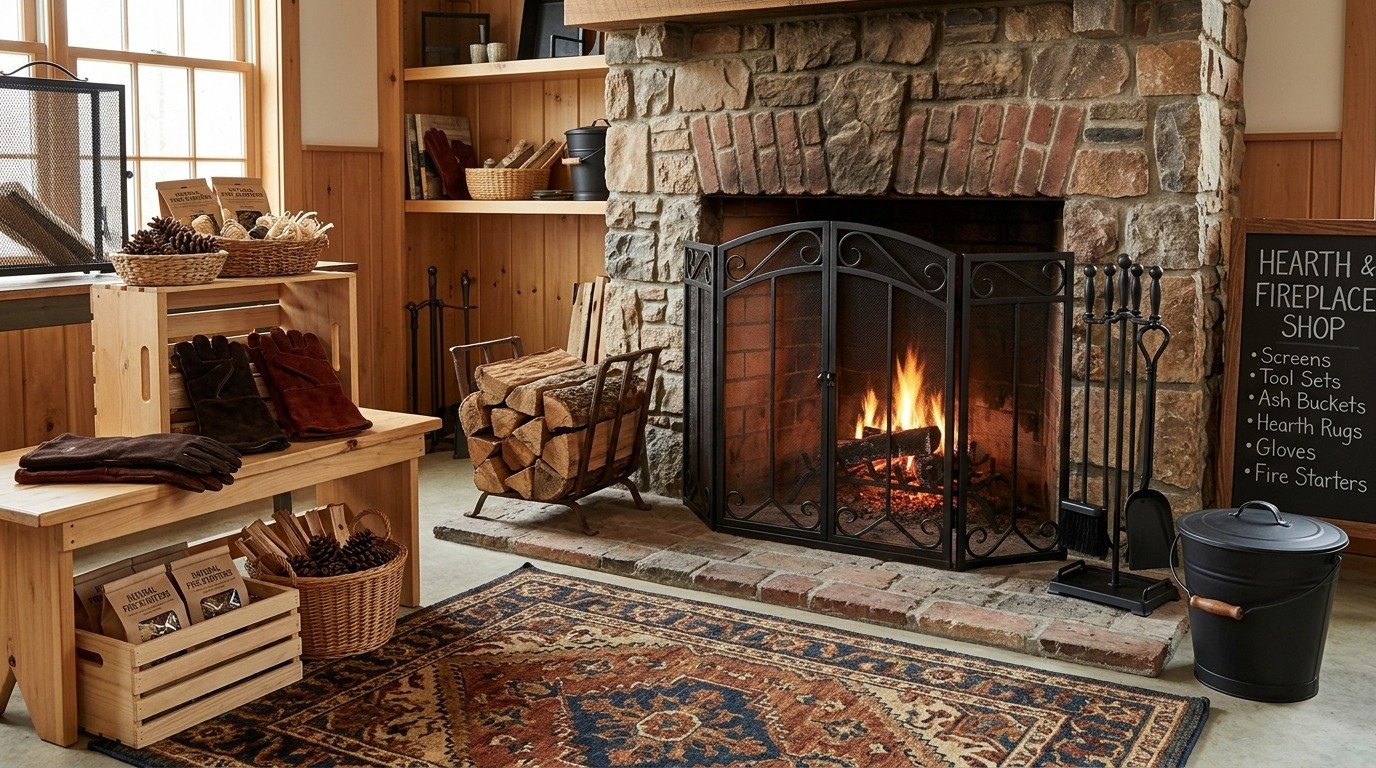
The right fireplace accessories each do one clear job. Here is what to buy and what to check for.
| Job | Accessory | What to look for |
|---|---|---|
| Stop sparks | Fireplace screen | Sturdy metal or glass, wide and tall enough to cover the full opening |
| Tend the fire | Tool set (poker, tongs, brush, shovel) | Solid handles and a stable stand |
| Carry and store logs | Log holder or hearth basket | Keep only a day or two of wood indoors |
| Clean up | Metal ash bucket with lid and shovel | All metal, with a tight-fitting lid |
| Start fires | Kindling and natural fire starters | Natural products only. Never use gasoline, kerosene, or charcoal starter. |
| Protect the floor | Fire-resistant hearth rug | A rug labeled fire resistant, placed in front of the hearth |
| Handle heat | Heat-resistant gloves | Long cuffs, made for fireplace use |
| Check your wood | Moisture meter | A reading under 20% before you burn |
Wood Stove Add-Ons
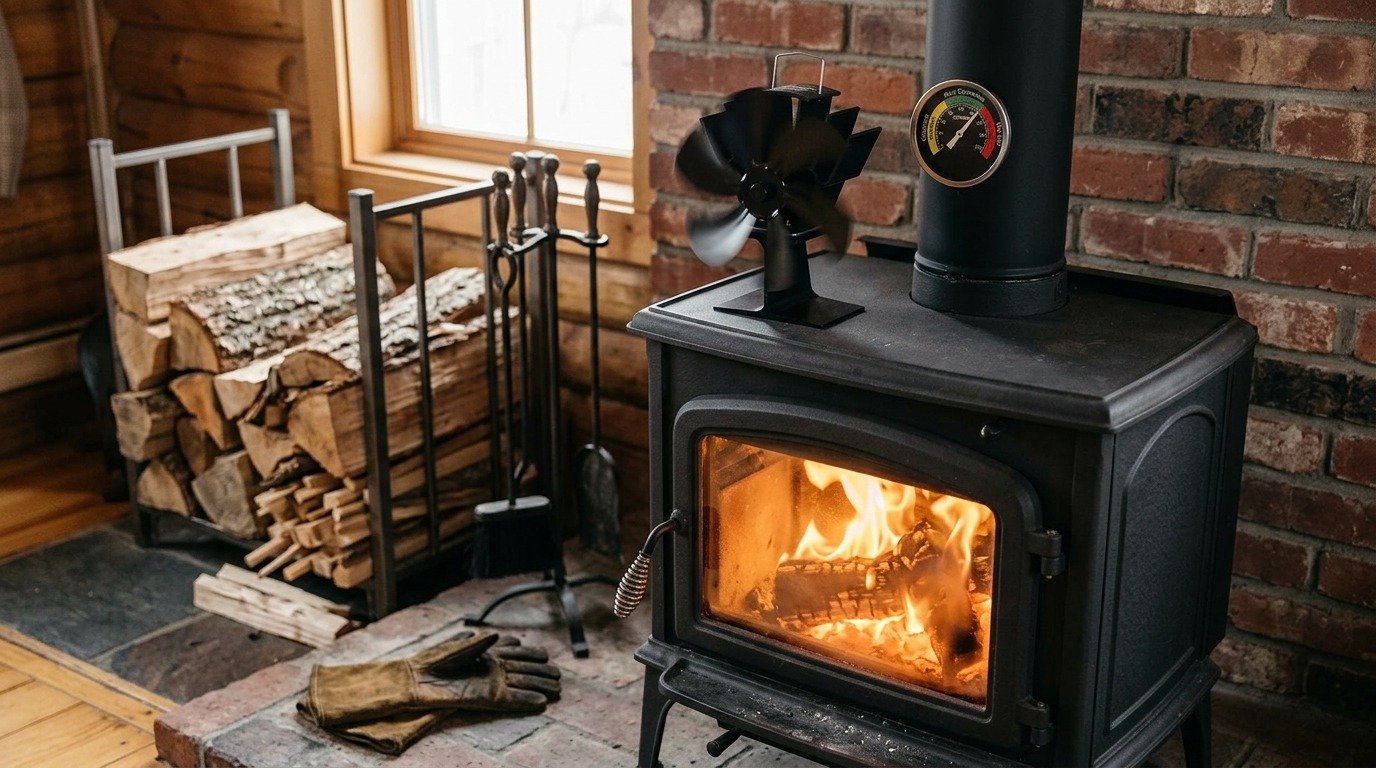
If you heat with a wood stove, two extras are popular. A stove-top thermometer helps you see whether the stove is running in its normal range, and a heat-powered stove fan helps move warm air into the room without electricity. Use any stove accessory only within the temperature limits its maker states, and follow your stove's manual.
The 2026 Look: Make the Hearth the Feature
Fireplace design has moved well beyond plain brick and a heavy mantel. This year's reports from fireplace makers and remodeling sites point in the same direction: warmer, calmer, more textured.
- Warm minimalism. Tonal stone, warm wood, and camel or tobacco tones replace stark white and sharp lines.
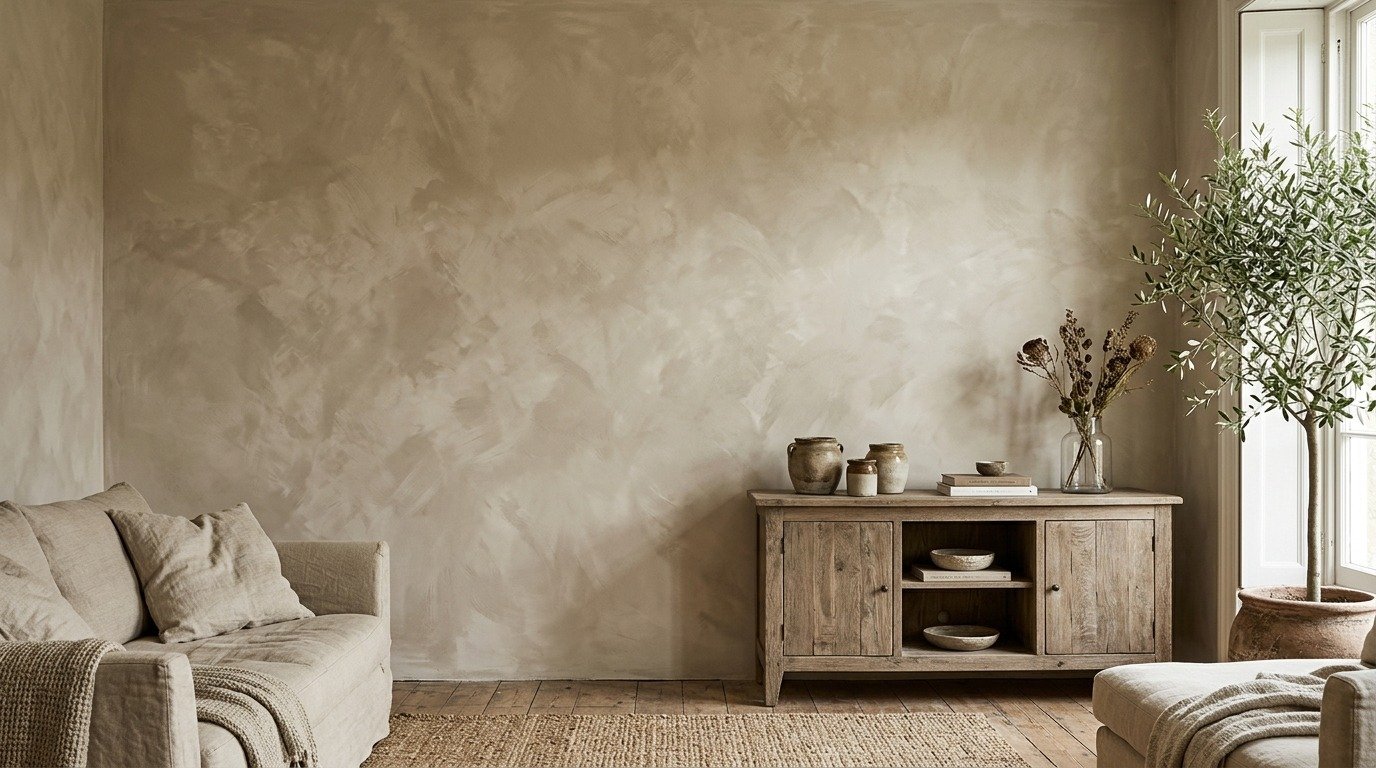
- Limewash and plaster. Soft, textured finishes are replacing basic painted brick.
- One continuous surface. Slab or stacked-stone surrounds that run floor to ceiling, with slimmer mantels.
- High contrast. A black or charcoal firebox against lighter stone looks crisp and modern.
- Built-ins. Shelving and niches for firewood, books, and art on either side of the fireplace wall.
- Linear inserts. Flush, frameless electric or gas fireboxes set right into the wall.
Refresh Your Fireplace by Effort Level
| Effort | Ideas |
|---|---|
| One weekend | Limewash or repaint the brick around the opening (not inside the firebox), restyle the mantel, add a new screen and tool set |
| A few weekends | Tile, stone veneer, or plaster for the surround, plus floating shelves or a firewood niche nearby |
| A professional job | A new insert, a full floor-to-ceiling surround, or built-ins around the firebox |
Electric, Gas, or Wood?
This is the biggest decision behind every fireplace remodel, and each type suits a different home.
| Type | Why people choose it | Watch out for |
|---|---|---|
| Wood-burning fireplace or stove | Real fire, crackle, and radiant warmth | Annual chimney care, dry wood, ash handling, and local burn rules |
| Gas | Easy on and off, no ash or wood storage | Professional installation, proper venting, annual service, and a CO alarm |
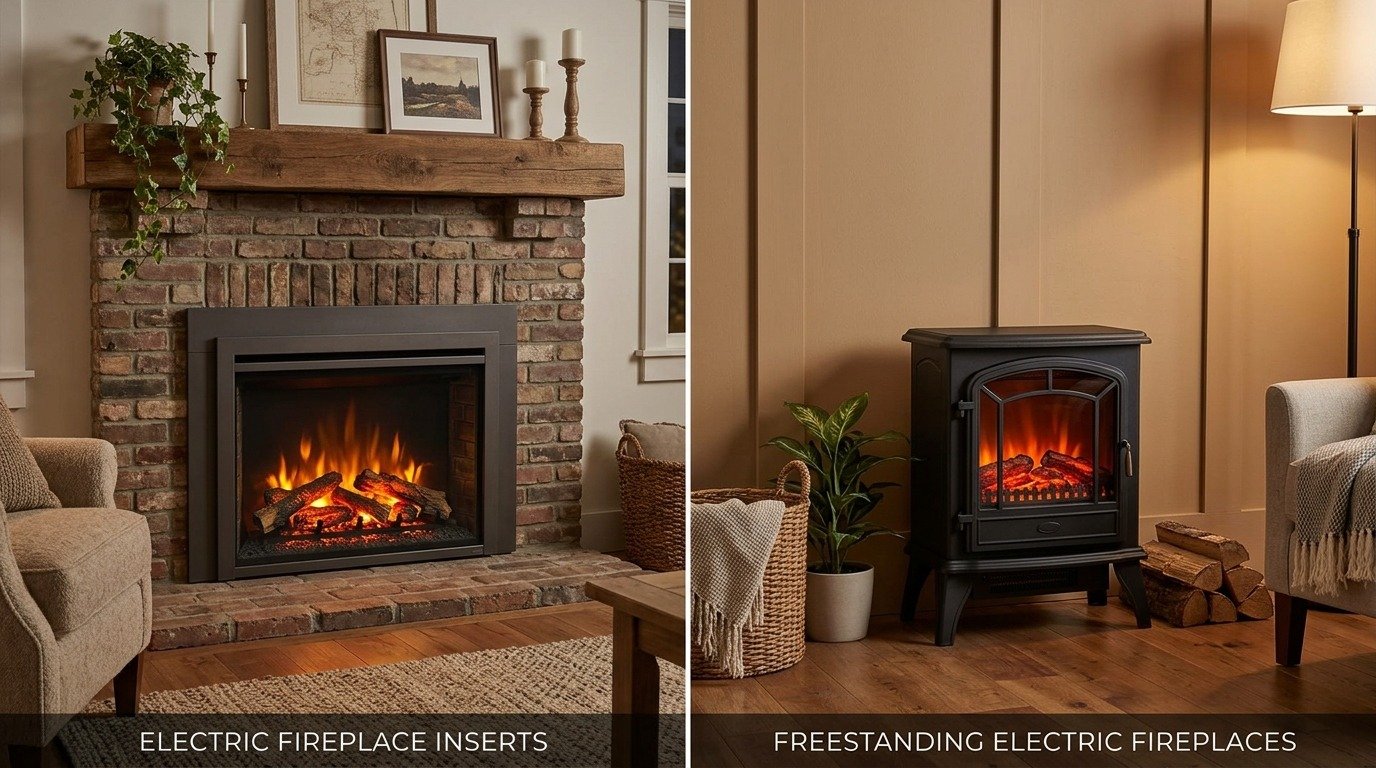
| Electric | No venting, no ash or soot, and many styles, including an electric fireplace insert | Often supplemental heat. Check your home's electrical capacity and follow the manufacturer's instructions. |
Electric Fireplace Insert Checklist
- Measure the opening and compare it to the product's listed dimensions.
- Look for a flame-only mode if you want the look without the heat.
- Check safety features such as overheat protection and automatic shut-off, and a safety-listing label from a recognized testing lab.
- Read the installation instructions for clearances and electrical requirements before you buy.
- Consider smart controls if you want app, timer, or voice control, a feature shoppers increasingly ask for.
Heater Safety Rules
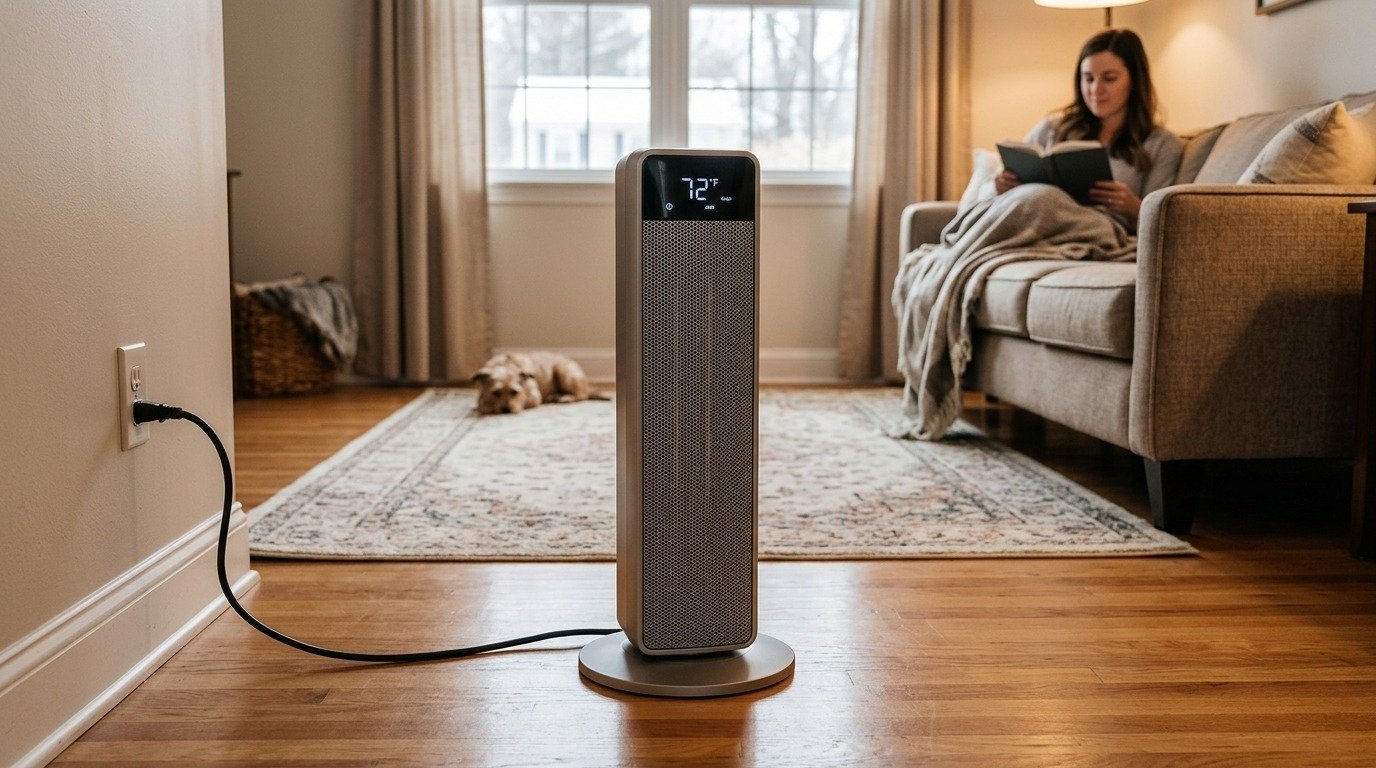
Portable heaters were only 3% of home heating fires in the US Fire Administration's 2017 to 2019 data, but they caused 41% of the fatal ones. That makes these rules worth following exactly.
- Keep everything that can burn at least three feet away, including curtains, bedding, and furniture.
- Turn the heater off when you leave the room or go to sleep.
- Plug it straight into a wall outlet. Never use an extension cord.
- Choose a heater with a safety-listing label from a recognized testing lab.
- Never dry clothes on a heater.
Firewood: Buy, Season, Store
Good firewood storage is the difference between a clean, bright fire and a smoky, sputtering one. Fresh-cut wood holds a lot of water and burns poorly, so it needs time to dry.
| Firewood fact | What to do |
|---|---|
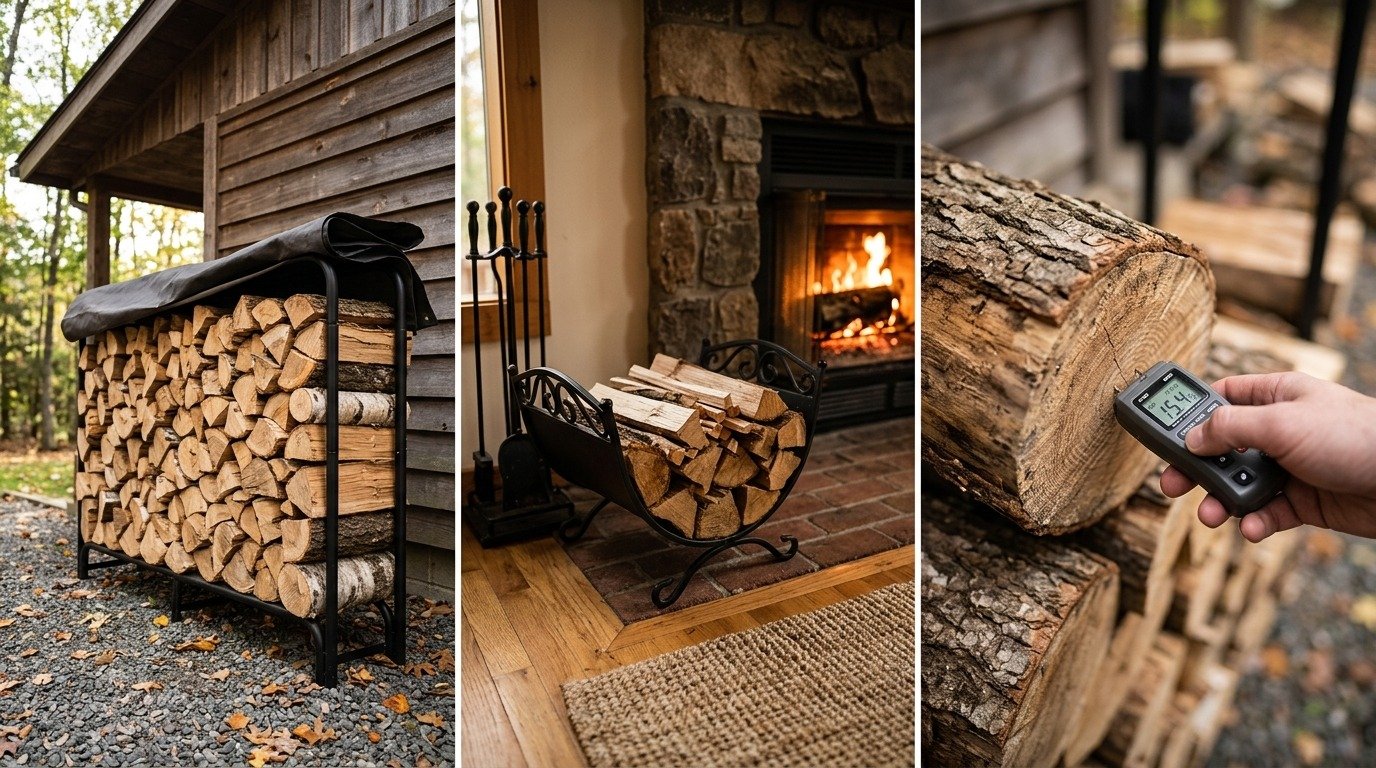
| Moisture | Wood burns best below 20% moisture. Test it with a moisture meter. |
| Seasoning time | At least six months. Softwoods take about six months, and hardwoods about twelve. |
| Splitting | Split pieces dry faster than whole rounds. |
| Stacking | Stack off the ground so air can move underneath. |
| Covering | Cover only the top. Covering the sides traps moisture. |
| Sourcing | Buy and burn local wood to avoid spreading invasive forest pests. |
Inside the house, keep only a day or two of wood in a log holder. Wood stored indoors for long periods can bring in insects and moisture.
Mantel & Hearth Styling That Isn't a Fire Hazard
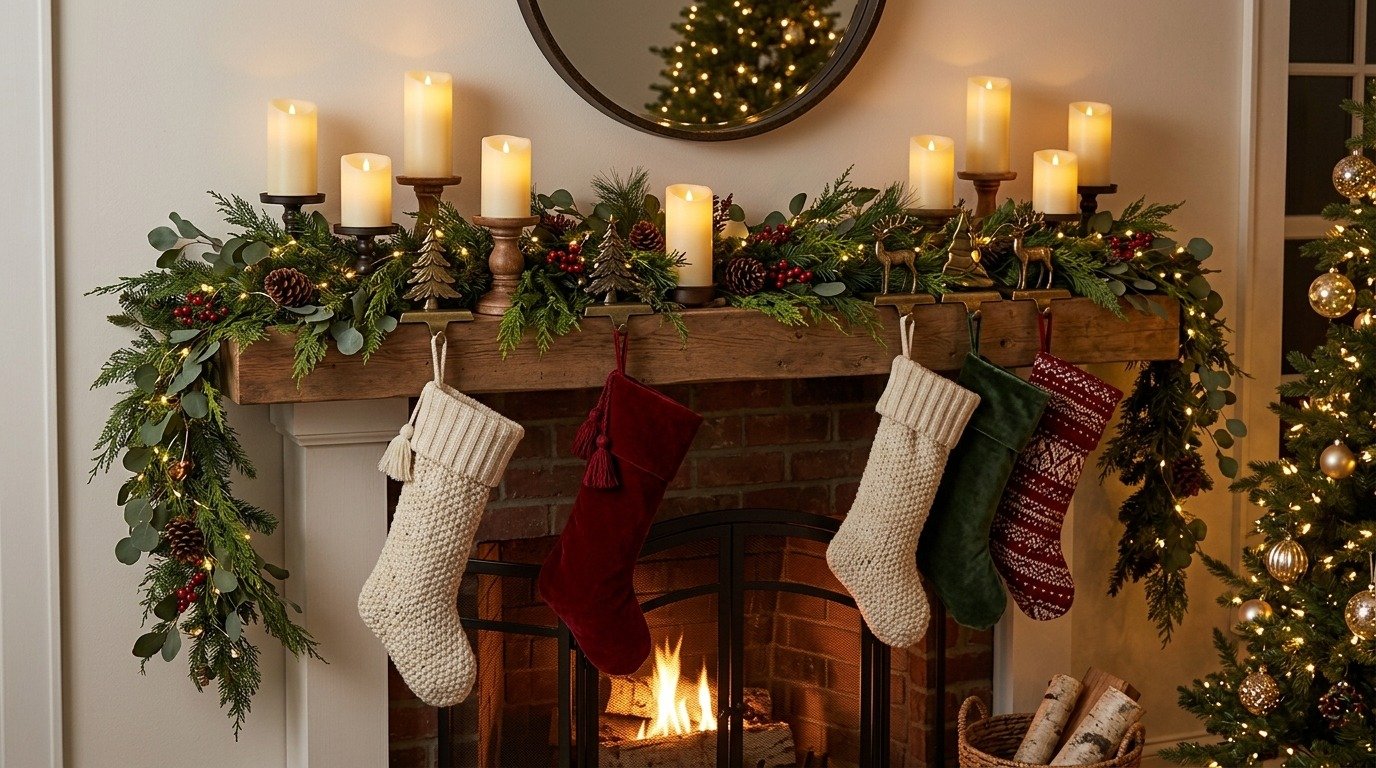
A beautiful mantel is part of any fireplace decor plan, and so is knowing where decoration stops and safety starts. A spark can ignite anything flammable near the fire, so fire departments advise keeping flammable items away from the mantel.
- Use flameless candles instead of real ones near a working fireplace.
- Time your garland and stockings. Put flammable seasonal decor on the mantel only when the fireplace is not in use, or move it well away from the heat.
- Style in layers. Try three different heights, one natural texture such as wood or stone, and one mirror or piece of art above.
- Decorate a non-working fireplace freely. Fill the opening with a cluster of candles, birch logs, or dried flowers.
Fire Pit & Outdoor Fireplace Gear
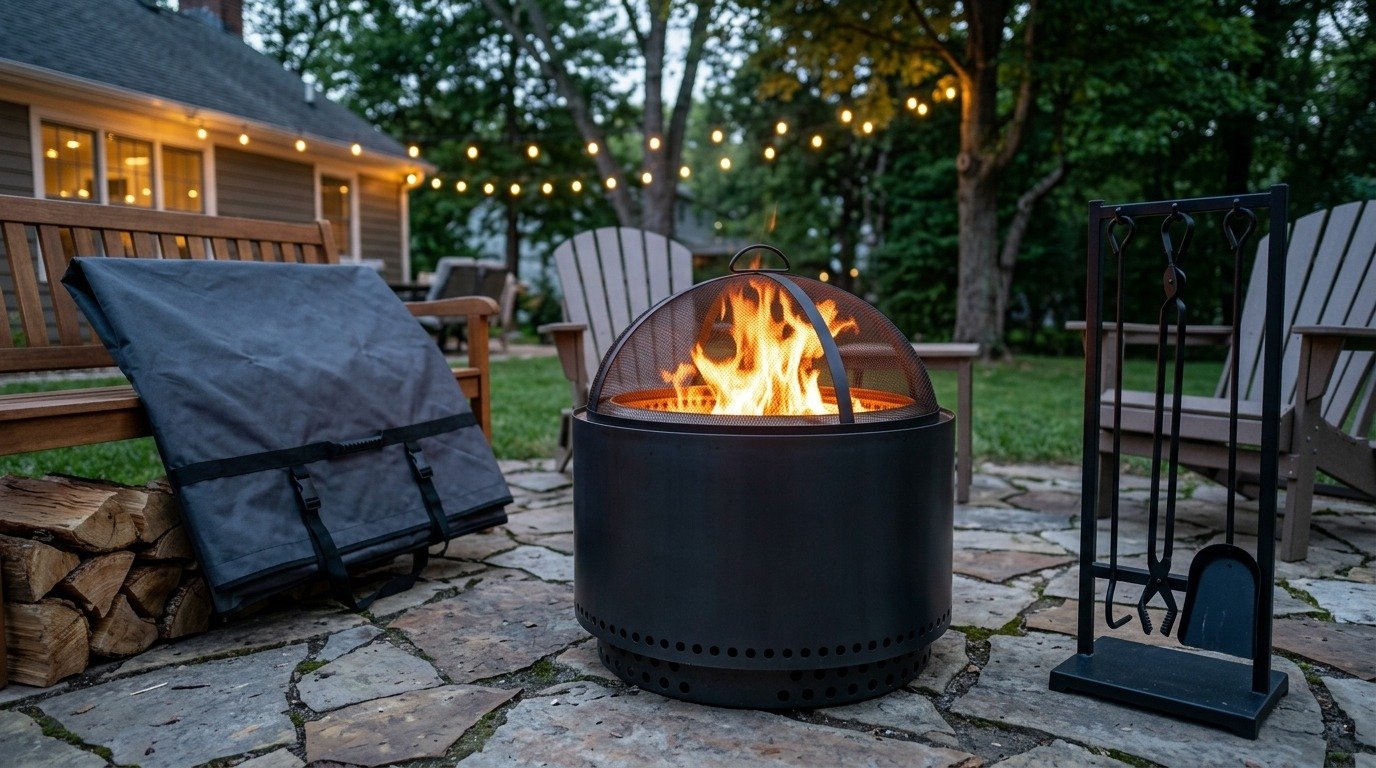
Searches for fire pit ideas and backyard fire pits are a big part of this trend, and the same safety logic applies outdoors.
- Place it carefully. Set it on a non-flammable surface, away from your house, fences, and overhanging branches. Common guidance is 10 to 25 feet from buildings, so check your local rules and the product's manual.
- Check for burn bans and local regulations before you light it.
- Never leave it unattended, and keep water or an extinguisher nearby.
- Use a spark screen and let ashes cool fully before disposal.
- Cover it when not in use to protect it from rain.
What to Buy First
| Priority | Buy | Why first |
|---|---|---|
| 1 | Carbon monoxide alarm | Protects your household if you burn anything or use gas |
| 2 | Fireplace screen | Stops sparks and is a basic safety layer |
| 3 | Metal ash bucket with lid | The safe way to handle ashes |
| 4 | Tool set and gloves | Makes tending the fire easier and safer |
| 5 | Moisture meter and firewood storage | Cleaner burning and less waste |
| 6 | Mantel decor and a hearth rug | The finishing touches once safety is covered |
Common Mistakes
Burning wet or green wood. It smokes, burns poorly, and builds up residue in the chimney.
Putting hot ashes in the wrong container. Plastic, cardboard, and paper bags can ignite. Use a metal container with a lid.
Closing the damper over hot ashes. It can push carbon monoxide into the house. Wait until the fire is fully out and ashes are cool.
Using an extension cord with a heater. Plug it directly into the wall.
Hanging garland on a mantel above a lit fire. Keep flammable decor away from the heat.
Covering the sides of a woodpile with a tarp. Cover only the top so moisture can escape.
Skipping the annual inspection. It is the single most important maintenance step for a real fireplace or stove.
Frequently Asked Questions
How often should I have my chimney inspected?
Fire-safety organizations recommend having chimneys and heating equipment cleaned and inspected every year by a qualified professional.
How dry does firewood need to be?
Below 20% moisture. Season split wood for at least six months, and use a moisture meter to check.
Do I need a screen with an electric fireplace?
Electric units do not throw sparks, so follow the manufacturer's guidance. A sturdy screen is essential for a real wood fire.
Is it safe to leave an electric fireplace heater on overnight?
Treat it like any space heater. Follow the manual, keep three feet of clear space around it, and turn it off when you leave the room or go to sleep.
Can I decorate my mantel with garland and stockings?
Yes, but keep flammable decor away from a lit fire. Use it when the fireplace is off, or choose flameless candles and non-flammable accents.
How far should a fire pit be from my house?
Common guidance ranges from 10 to 25 feet, but local codes and the manufacturer's instructions come first. Check both before you light it.
What's the best way to update an old brick fireplace?
Limewash or paint on the brick around the opening is a popular weekend option. For anything near the firebox, structural changes, or new inserts, follow clearances and hire a licensed installer.
Where should carbon monoxide alarms go?
Fire departments advise placing them outside bedrooms and on every level of your home. Test them monthly and replace them according to the maker's instructions.
Final Thoughts
The best hearth is one you can enjoy without worry. Start with the safety basics, add the accessories that suit your fireplace or stove, and then layer in the textures and decor that make the room feel like yours. A few well-chosen pieces will do more for the look and the feel of your space than a full remodel.