
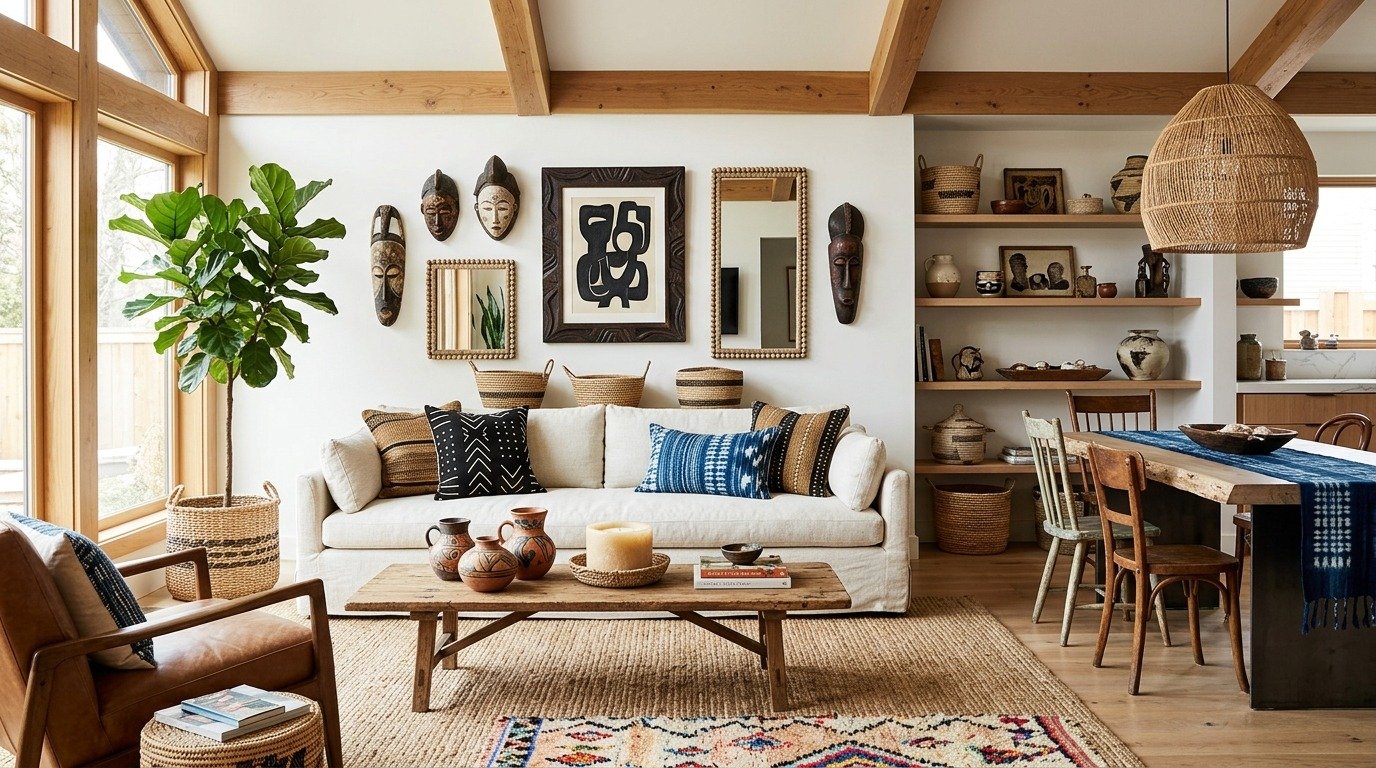

Afro-Chic Home Decor: The Design Fusion Going Viral for 2026
Pinterest has an official name for this trend, and it isn't one you have likely seen anywhere else yet: Afrohemian. Coined in Pinterest's own 2026 trend forecast, it describes a fusion of African design heritage and free-spirited bohemian style, and it's being flagged as one of the platform's most significant home trends of the year. The "sad beige," sterile-minimalist look that dominated the last several years is officially fading, and something warmer, more textured, and more personal is taking its place.
That last stat is worth pausing on. Most viral home trends are driven by Gen Z and Millennials, but Pinterest's own data credits Boomers and Gen X as the early adopters here, often tied to a life stage centered on travel, storytelling, and stepping away from disposable "fast furniture." This is a guide to what the look actually is, the specific materials and colors that define it, and -- just as importantly -- how to bring it into your home in a way that respects where it comes from.
1. What Afro-Chic (Afrohemian) Decor Actually Means
2. The Color Palette That Holds It Together
3. Key Materials & Textiles to Know
4. How to Style It, Room by Room
5. Doing It Respectfully, Not as a Costume
6. FAQs
What Afro-Chic (Afrohemian) Decor Actually Means
At its core, Afrohemian design sits at the meeting point of two design languages. The African side contributes pattern, symbolism, ancestral craft techniques, textile history, and a deep, generational relationship with natural materials. The bohemian side contributes looseness: layered rugs, mixed eras of furniture, personal keepsakes, plants, and a room that never feels overly staged.
Unlike a lot of design trends, this one isn't really new. What's new is the naming and the surge in mainstream interest, which is shifting it from a niche design-world reference into something showing up in everyday living rooms.
The Color Palette That Holds It Together
Pattern is the star of this style, but it only works with the right neutral foundation underneath it. Designers working in this space consistently point to the same restrained, earthy base:
Start with a neutral base in one or two of these tones, then let textiles and art carry the bolder pattern and color on top. Rooms that skip the neutral base and go straight to pattern-on-pattern tend to feel chaotic rather than curated.
Key Materials & Textiles to Know
Knowing the real names and origins of these materials is what separates an authentic-feeling room from a generic "tribal print" throw pillow, and it makes shopping for the look far more intentional.
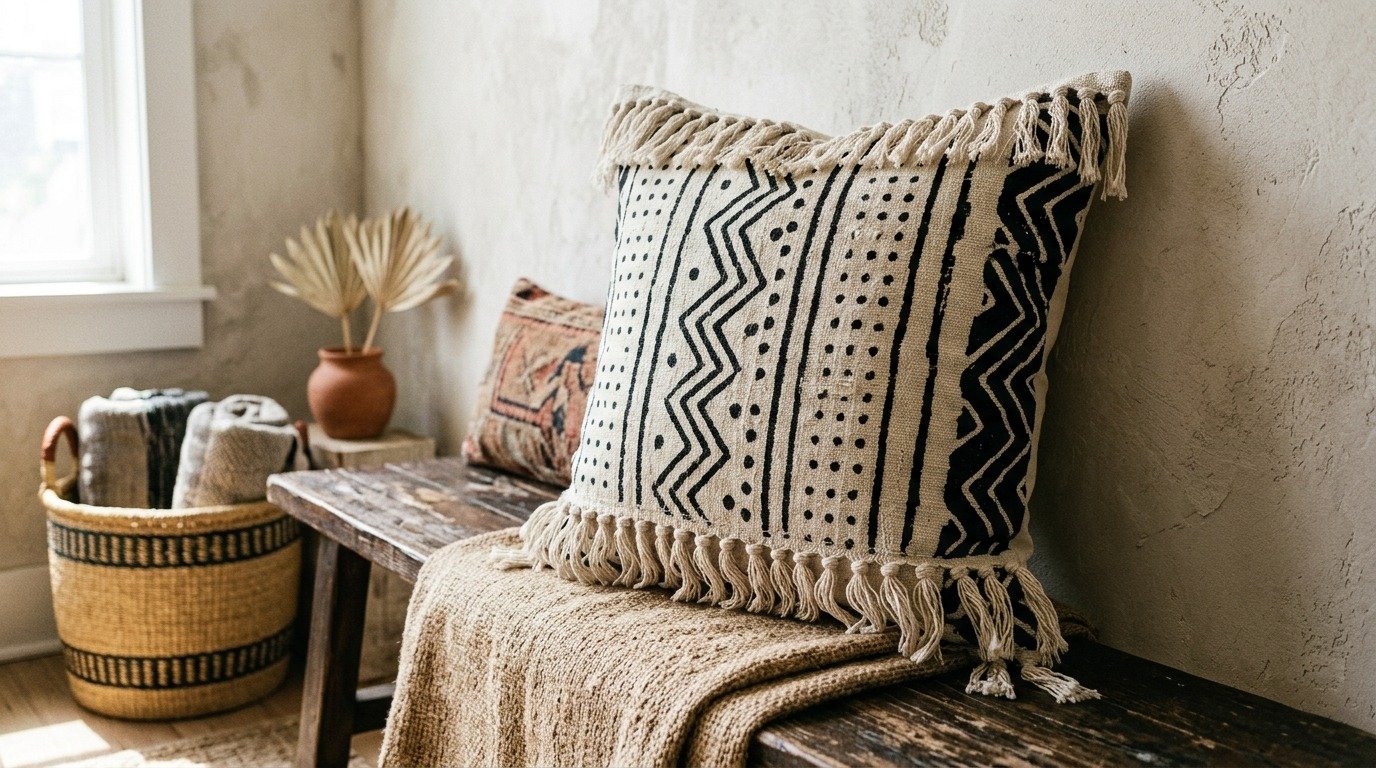
Bogolanfini (Mudcloth)
A hand-woven cotton fabric from Mali, traditionally dyed using fermented mud to create bold geometric patterns in black, white, or rust tones. It is one of the most recognizable textiles in this entire aesthetic.
Adire Fabric
A resist-dyed textile tradition from Nigeria, typically in rich indigo tones with intricate patterned designs. It works beautifully as framed textile art or as a statement throw.
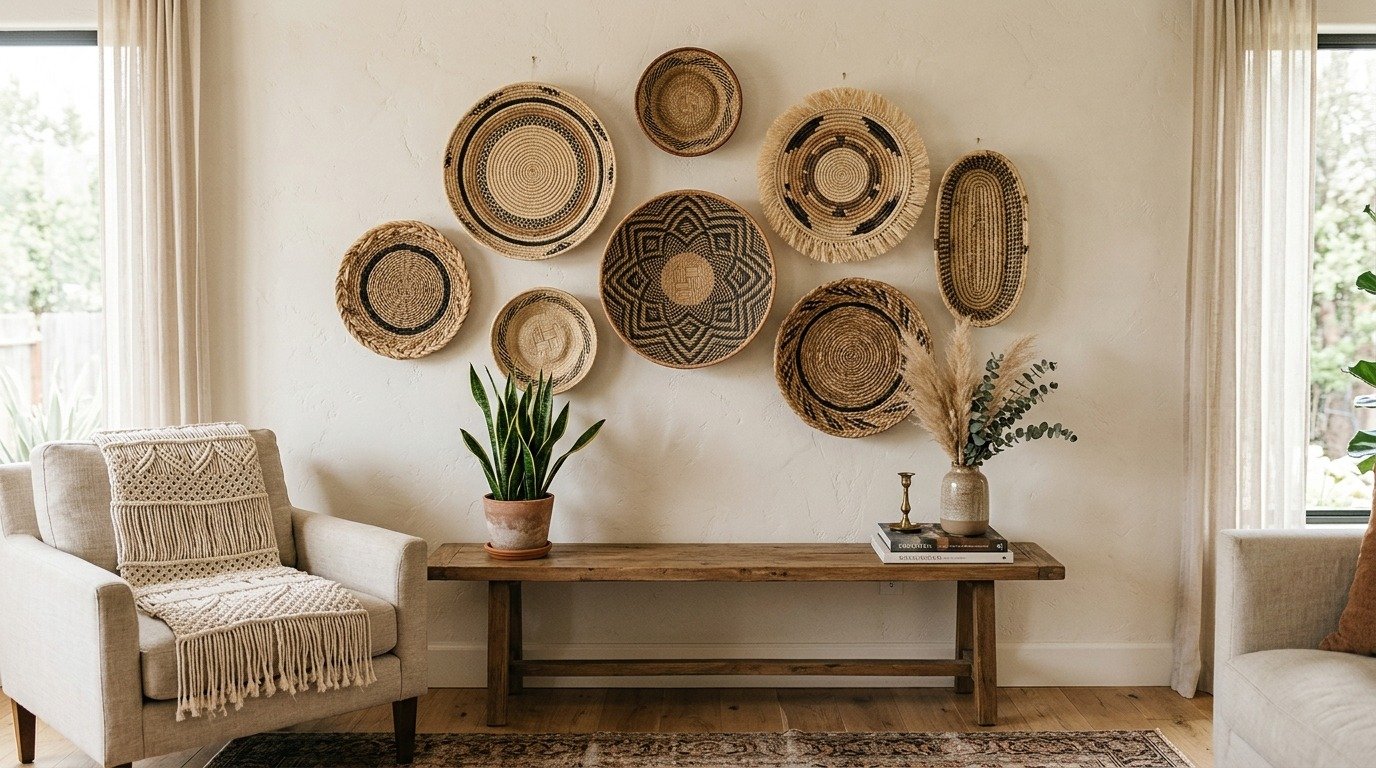
Handwoven Baskets
Traditionally woven from palm leaves or vines with subtle geometric detailing. The current styling approach clusters them on a wall in odd numbers, such as three, five, or seven, to create an organic, sculptural installation in place of traditional framed art.
Rattan & Natural Fiber Furniture
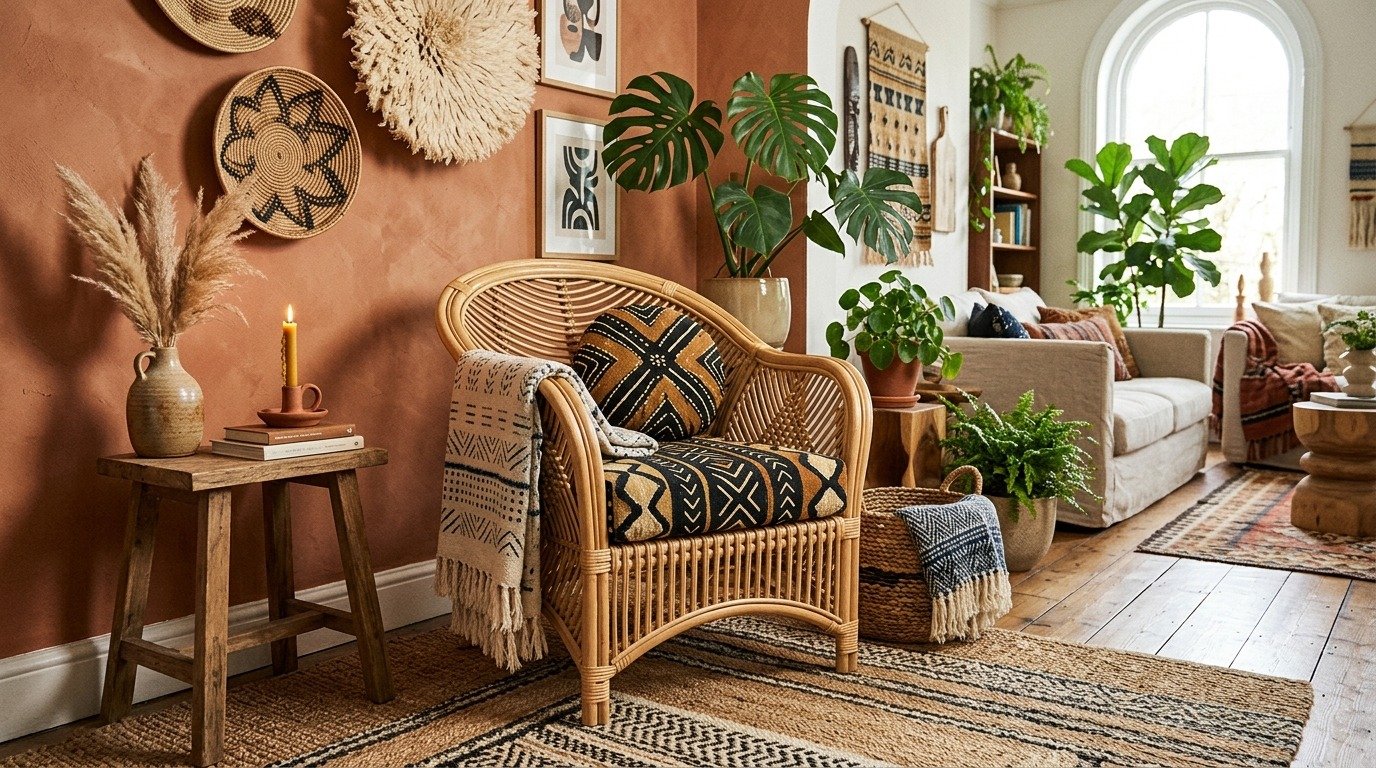
Rattan accent chairs and natural fiber rugs (jute, sisal, seagrass) bring the bohemian half of the equation, adding warmth and texture without competing with bolder patterned textiles.
Ethiopian & Berber-Inspired Wall Art
Bold, symbolic wall art rooted in specific regional traditions adds a narrative layer to the room, functioning as the visual "story" the rest of the space is built around.

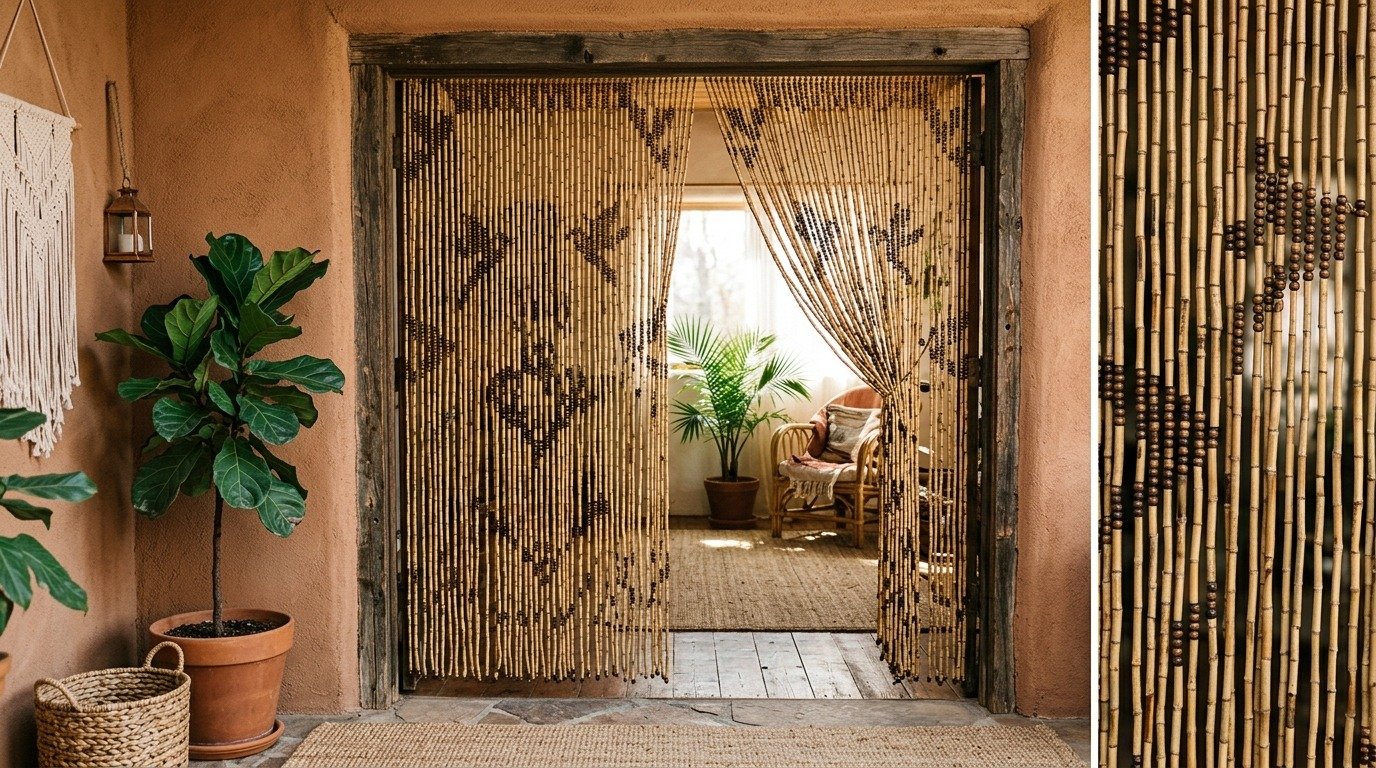
Bamboo Beaded Curtains
A textural, sound-softening accent for doorways or room dividers that adds movement and warmth without requiring a full renovation.
How to Style It, Room by Room
Living Room
Anchor the space with a natural fiber rug, add a rattan accent chair, and layer in two or three mudcloth or Adire-print pillows on a neutral sofa. Finish with a clustered basket wall installation as the room's focal point.
Bedroom
Use a warm neutral bedspread as the base, then add one bold patterned throw at the foot of the bed and a piece of framed textile art above the headboard rather than a traditional painting.
Entryway
A single handwoven basket for storage, a small piece of wall art with a real cultural reference point, and a bamboo beaded curtain or natural fiber runner make a strong first impression without overwhelming a small space.
Doing It Respectfully, Not as a Costume
This is the part most trend roundups skip, and it matters. Design authorities covering this trend are consistent on one point: a mudcloth pillow, a rattan chair, and a mask on the wall do not automatically make a room culturally grounded. The difference between an appropriative room and a thoughtful one comes down to intention.
Where possible, buy from artisans or brands that are transparent about where a piece comes from and who made it, rather than anonymous mass-produced "African-style" knockoffs. Learn the actual name and origin of a pattern or technique instead of treating it as generic decoration. And build the room around a handful of meaningful pieces with real stories, rather than scattering unrelated "tribal-looking" items purely for visual effect.
Frequently Asked Questions
Is Afro-chic decor the same as regular boho style?
No. Standard boho decor pulls from many global references loosely, while Afro-chic (Afrohemian) decor specifically centers African design heritage, craft techniques, and materials, layered with boho's relaxed, collected feel.
Do I need authentic, artisan-made pieces, or are reproductions okay?
Authentic, artisan-sourced pieces are the more respectful choice when you can find and afford them, since they support the actual communities and craft traditions the look draws from. If using reproductions, learn the real name and origin of the pattern or technique rather than treating it as generic "tribal print."
How do I avoid the room looking cluttered with this much pattern?
Start with a neutral earth-toned base across the largest surfaces, like walls, rugs, and upholstery, and use only two or three patterned statement pieces rather than layering pattern on every surface.
Can this style work in a small apartment?
Yes. A single basket wall cluster, one rattan chair, and a natural fiber rug can establish the look in a small space without requiring a full room redesign.
Why is this trend being driven by older generations instead of Gen Z?
Pinterest's research points to Boomers and Gen X entering a life stage focused on travel, personal storytelling, and moving away from disposable "fast furniture," which aligns naturally with a design style built on meaningful, long-lasting pieces.
Final Thoughts
Afro-chic, or Afrohemian, decor is one of the few home trends built around genuine craft history rather than a fleeting color palette, which is exactly why it has staying power beyond a single season. Start with the neutral base, add one or two pieces with a real story behind them, and let the room grow from there rather than trying to buy the whole look at once.

As an Amazon Associate, we earn from qualifying purchases.